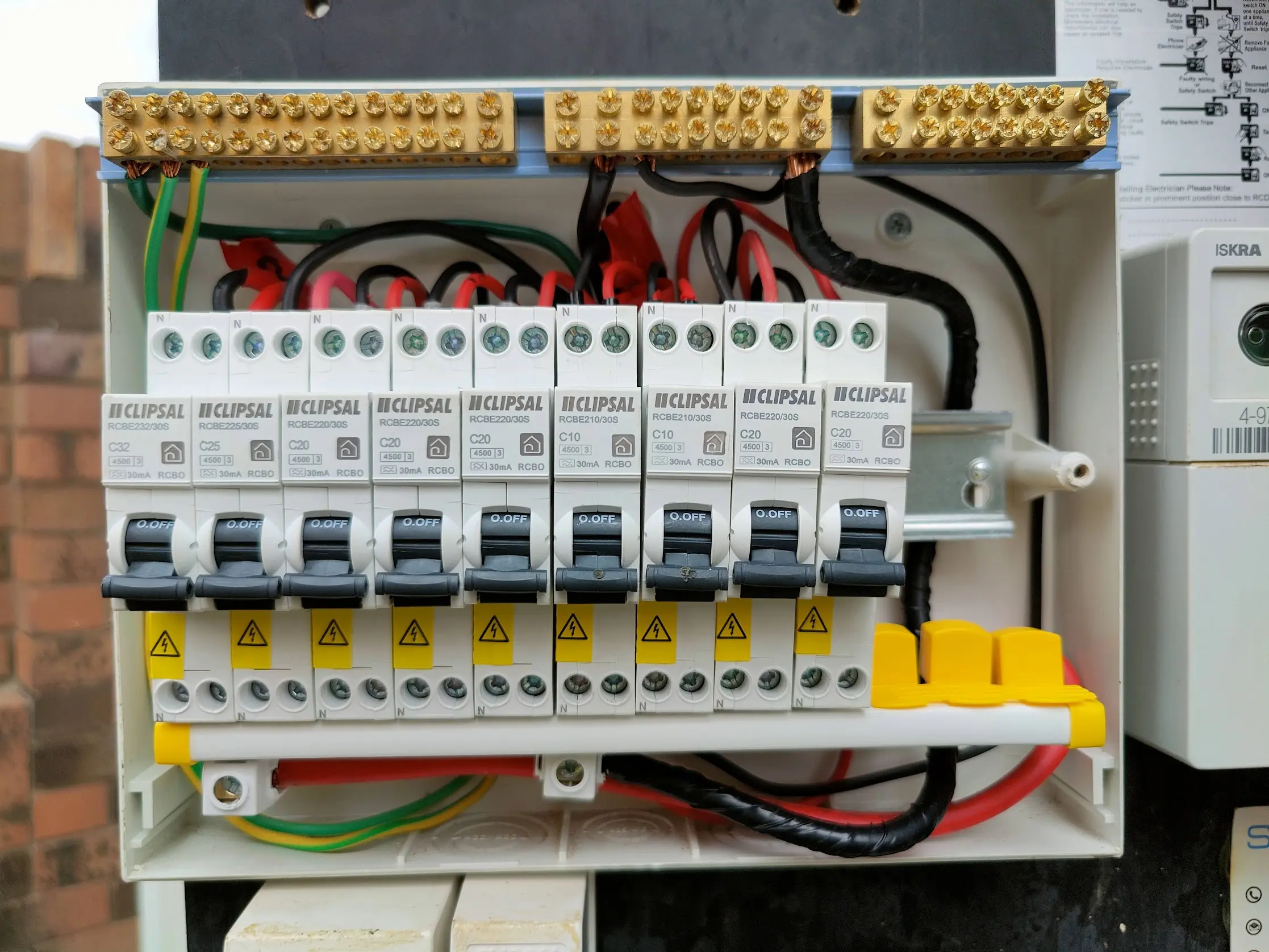

Overview
Whether you’re a homeowner, landlord, or business operator, understanding the rules around safety switches is critical. These devices are not only essential for protecting lives but are also a legal requirement in many cases.
The installation and use of safety switches are governed by the Queensland Electrical Safety Act 2002, the Electrical Safety Regulation 2013, and the AS/NZS 3000:2018 (Wiring Rules). This blog breaks down what safety switches are, how to identify them, and when they must be installed.
When Do You Need to Install Safety Switches?
New Installations and Alterations
According to AS/NZS 3000:2018, safety switches are required for all final subcircuits supplying socket outlets, lighting, and fixed appliances in residential installations. This applies to new builds, renovations, and any electrical work that alters an existing installation.
Rental Properties
Under the Electrical Safety Regulation 2013, all Queensland rental properties must have a safety switch installed on all power circuits. If there’s a change of tenancy and no switch is installed, the landlord must install one within six months.
Properties for Sale
If you’re selling a home in Queensland, the Electrical Safety Regulationrequires you to disclose whether a safety switch is installed. If not, the buyer must install one within three months of the property transfer.
Commercial and Workplaces
Depending on the use of the premises and the types of equipment used, workplaces may require RCDs under both AS/NZS 3000 and the Work Health and Safety (WHS) Regulation 2011.
Importance of Replacing Faulty Safety Switches
A non-functioning or unreliable safety switch is just as dangerous as having none at all. Over time, safety switches can become worn, damaged, or outdated, especially in older homes.
If your switchboard is cluttered, unlabelled, or contains old porcelain fuses or plug-in RCDs, it’s time for an upgrade. Replacing faulty or non-compliant safety switches ensures your home or business remains safe and compliant with both AS/NZS 3000 and Queensland legislation.